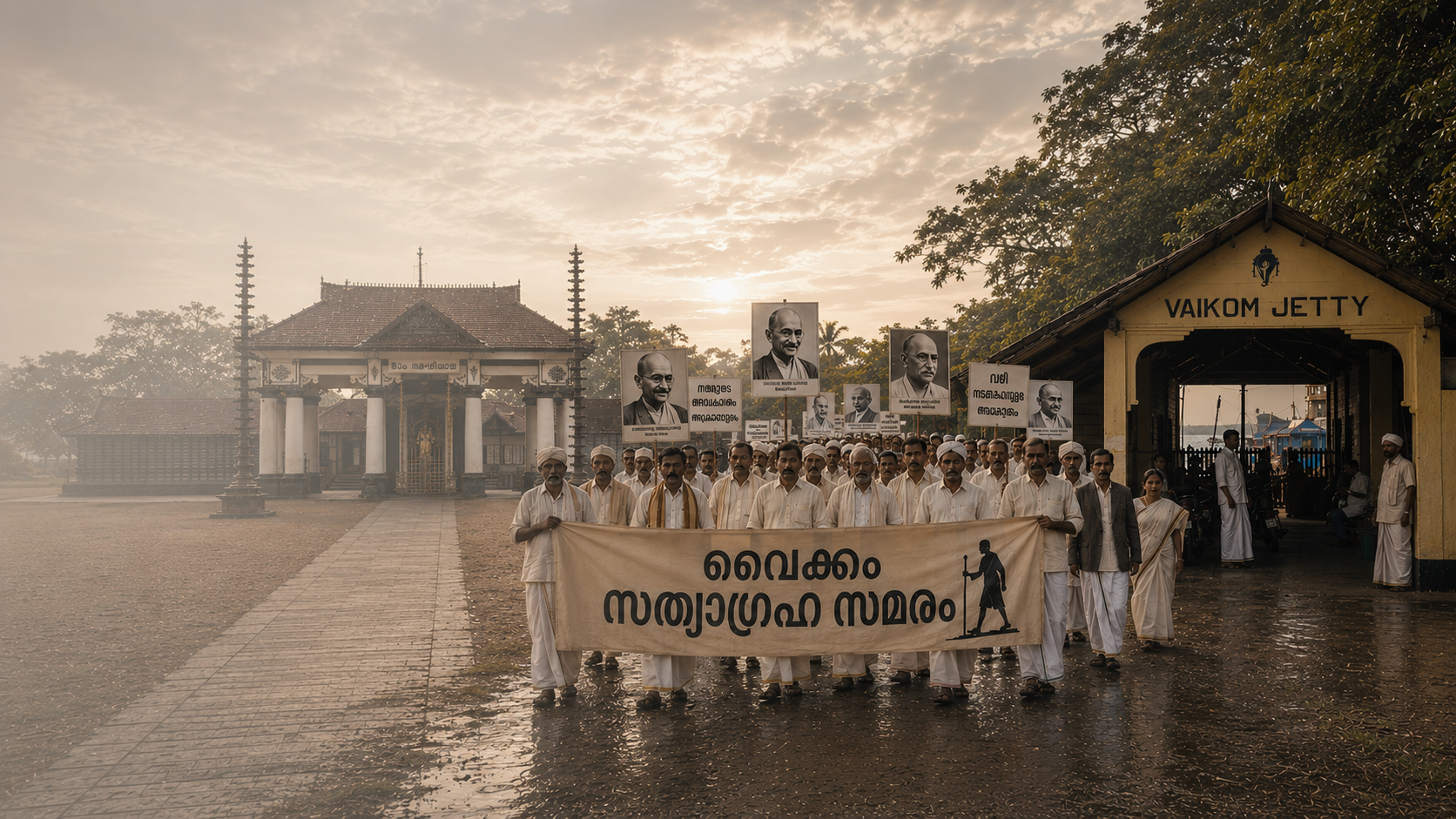
Vaikom is one of Kerala’s oldest and most historically significant towns, situated on the western shores of the Vembanad Lake in Kottayam district. For centuries, its strategic location along inland waterways and fertile agricultural lands made it an important centre of trade, culture, and religious activity in the erstwhile Travancore kingdom. The town derives its identity from the renowned Vaikom Mahadeva Temple, one of the oldest Shiva temples in Kerala, believed to be over a thousand years old. The temple’s influence fostered the growth of settlements, markets, festivals, and traditional arts, shaping Vaikom into a prominent pilgrimage destination. The Historic Vaikathashtami at Vaikom MahadevaKshetra is celebrated equally by the People of Vaikom.
Vaikom occupies a distinguished place in India’s social reform history through the historic Vaikom Satyagraha of 1924–1925. The movement emerged as a peaceful protest against caste-based restrictions that prevented marginalized communities from using roads surrounding the temple. Led by reformers such as T. K. Madhavan, K. Kelappan, George Joseph, Mahatma Gandhi, and Periyar E. V. Ramasamy, the struggle became a landmark campaign for social equality. Its success significantly influenced the later Temple Entry reforms in Travancore and remains a defining chapter in Kerala’s progressive social transformation.
Beyond its historical importance, Vaikom is celebrated for its vibrant cultural heritage, traditional temple arts, music, literature, and close association with Kerala’s backwater lifestyle. The town is also known for its agricultural traditions, fishing communities, inland water transport, and the famed snake boat culture of the surrounding waterways. Today, Vaikom continues to thrive as a centre of religious tourism, education, and commerce while preserving its legacy as a symbol of social justice, communal harmony, and Kerala’s rich cultural heritage.